

What Lenders Look For: A Behind-the-Scenes Guide for Real Estate Operators
You’ve found the deal. You’ve crunched the numbers. You’re ready to move. But now comes the part that separates good operators from the rest: securing funding.
If you’ve ever asked yourself, “What exactly are private lenders looking for?”—you’re not alone. While traditional banks rely on rigid checklists and FICO...

Why Landlords Refinance With a Direct Lender
For landlords trying to scale a rental portfolio or unlock equity, the refinancing process can either be a strategic springboard—or a painful, deal-killing delay. If you’ve ever waited weeks for a bank appraisal, submitted stacks of paperwork, or been turned away due to portfolio size, you already know: traditional lenders aren’t built...

Real Estate Equity Partnerships: Control vs. Ownership
Raising capital is part of scaling any real estate business—but what happens when the check comes with strings attached? For many first-time syndicators, aspiring developers, or mid-tier operators, the idea of bringing in an equity partner often feels like an all-or-nothing proposition: you get the capital, but lose control.
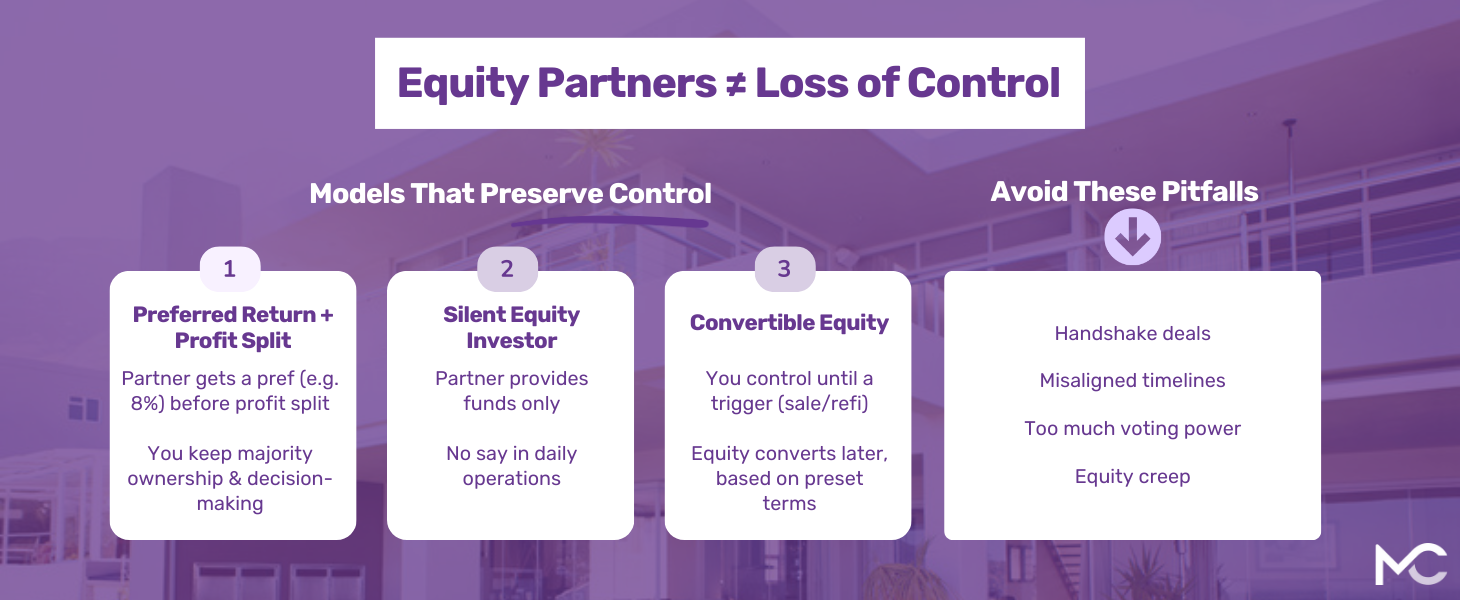
How to Leverage Equity Partners Without Giving Up Control
In real estate, control is everything. It’s your project, your vision, your risk—so why should someone else be calling the shots? For many new and growing investors, the idea of bringing in an equity partner raises a red flag: Will I lose control of my deal?
The good news?...

10 Terms Every First-Time Real Estate Investor Needs to Understand
Getting into real estate investing can feel like learning a new language. Between acronyms, underwriting jargon, and construction slang, it’s easy for a first-time investor to feel out of their depth before they even make an offer.
But here’s the truth: You don’t need to be an expert—you just...

4 Reasons Why Real Estate Investors Use Bridge Loans
In real estate, timing is everything. Whether you're scooping up an underpriced property at auction, racing to close before a competitor, or bridging the gap between purchase and permanent financing-delays kill deals.
That’s where bridge loans come in.
Bridge loans are short-term, asset-based loans designed to keep your deal alive while you transition from...

From First Flip to Full-Time: Scaling Your Business With Private Capital
Most real estate investors remember their first flip vividly—the nerves at the closing table, the scramble to manage a contractor, the thrill of watching a dated property transform under their budget and timeline. But for some, that first successful deal isn’t just a win—it’s a turning point.
The real...

5 Funding Mistakes First-Time Real Estate Investors Make (and How to Avoid Them)
Breaking into real estate investing is exciting—but it’s also loaded with landmines. For first-time investors, funding the deal is often where things fall apart. Whether it’s overestimating what banks will offer, underestimating timelines, or choosing the wrong partner, a bad funding move can destroy your margins - or the deal altogether.

Fix and Flip in a Hot Market: How to Stay Competitive With Fast Cash Offers
If you’ve tried to land a fix-and-flip deal in the last year, you know the drill: by the time you finish your walk-through, four offers are already in—and one of them is cash. It’s no secret that competition is fierce in today’s real estate market. Demand is outpacing supply in dozens of...

Syndication vs. Joint Venture: Choosing the Right Structure for Growth
As a real estate investor, there comes a moment when you realize you can’t do it all alone. The single-family flips were a great starting point—but now, you're eyeing bigger opportunities: multi-unit renovations, ground-up construction, or acquiring mid-size rental portfolios. That’s when you face the question: should I structure this as a...

The 5 Fastest-Growing States for Real Estate Investors in 2025 (And How to Fund Deals There)
In real estate investing, timing and geography are everything. And in 2025, investors across the country are tracking five states that are exploding in both population and opportunity. Whether it’s surging rental demand, booming job markets, or investor-friendly policies, these markets are becoming magnets for deal-makers—if you can fund fast enough to...

Private Lending in a Tight Credit Market: Why It’s Booming
In a world where access to capital defines your pace and potential, the rules of the game are changing fast. Over the last 18 months, banks have pulled back—tightening credit requirements, slashing approvals, and increasing the scrutiny on every single borrower.
But one sector hasn’t flinched: private lending. In...

How to Build a Reliable Financing Stack in Unpredictable Markets
In 2025, one thing is certain: the market is uncertain. Interest rates remain volatile, traditional banks are tightening credit, and deal timelines are compressed. For real estate investors, that means a static capital strategy is a liability. The investors who will thrive in this cycle are those who know how to stack...
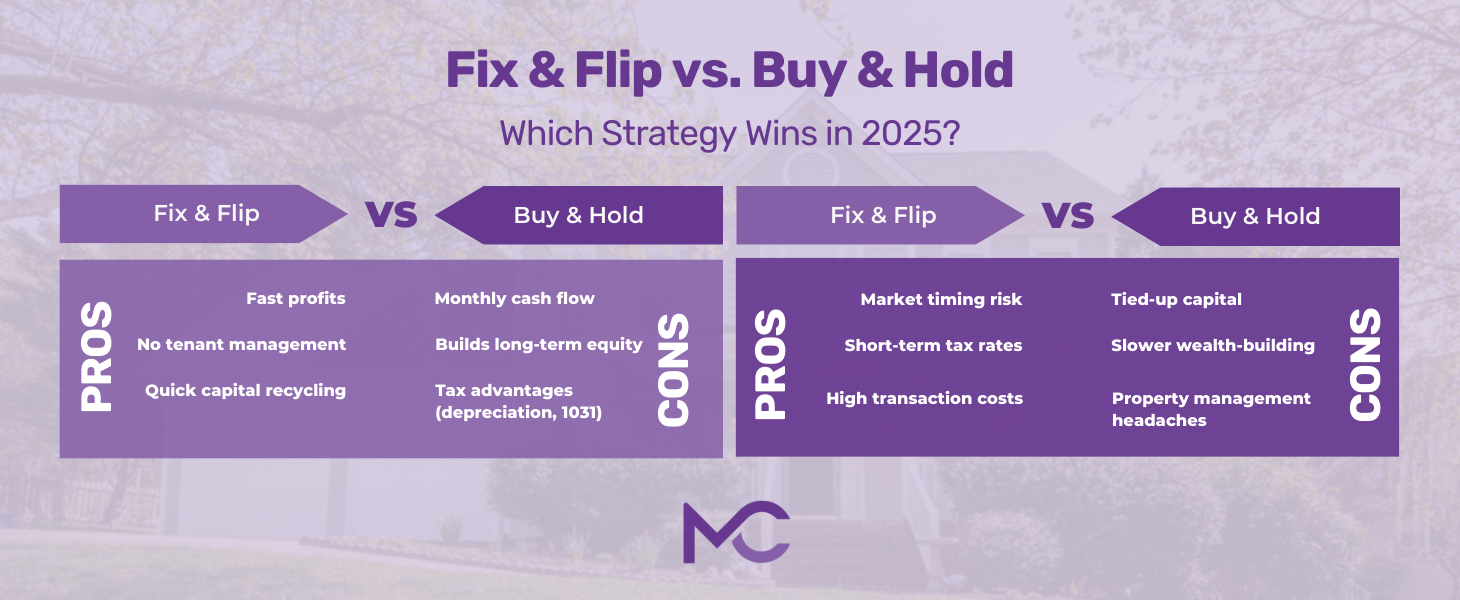
Fix and Flip vs. Buy and Hold: Which Strategy Wins in Today’s Market?
If you’re exploring real estate investing in 2025, you’ve likely asked yourself: “Should I flip this house or rent it out long term?” It’s one of the most critical decisions an investor can make—and it comes down to your goals, risk tolerance, and how quickly you need capital to work for you.

Why Summer Is the Smartest Time to Refinance Your Rental Property with Malve Capital
For real estate investors focused on long-term wealth building, timing your refinance matters just as much as finding the right lender. Summer offers unique advantages for refinancing rental properties—especially if you're looking to pull cash out to fund your next deal, lock in a long-term fixed rate, or lower monthly payments to...

Strategies for Real Estate Investors When Inventory is Scarce
Investing in the real estate market with limited inventory can feel like a constant uphill battle. Quality properties are harder to find, competition is fierce, and opportunities seem to disappear as quickly as they arise. For investors, this environment demands a creative, proactive approach. The good news? Scarce inventory doesn’t mean no...

How Do I Apply for a Hard Money Loan?
Hard money loans are well-suited for investors seeking quick, flexible financing solutions. Unlike traditional bank loans, hard money loans are asset-based and provided by private lenders. They focus primarily on the property's value rather than the borrower's creditworthiness. Here’s how to apply for a hard money loan with Malve Capital, the...

The BRRRR Method of Real Estate
For real estate investors, maximizing returns while building a sustainable portfolio is key to long-term success. One strategy gaining traction in recent years is the BRRRR method. BRRRR stands for Buy, Rehab, Rent, Refinance, and Repeat, and it’s a systematic approach to building wealth through real estate.
Whether new...

What Happens If Your Real Estate Sale Falls Through?
When a real estate sale falls through, it can be frustrating and stressful for both owners and investors. Whether the deal collapses due to financing issues, inspection problems, or a change of heart from the buyer, the outcome can leave you uncertain about your next steps. Understanding why the sale didn’t go...

Asset-Based Loans vs. Traditional Mortgages
Asset-based loans and traditional mortgages are two primary financing options. Traditional mortgages typically involve long approval processes, strict credit requirements, and fixed terms, making them ideal for stable borrowers seeking to purchase property.
By contrast, asset-based loans offer more flexibility, leveraging existing assets for quicker access to capital. These...